Tuesday, June 7, 2011

Exploring the sand dunes

There are many beautiful walks on the island.  A favourite walk that guests keep returning to is the hike up the enormous sand dunes on West Telegraph Bay.

Easter saw three families (10 children) take up residence in the Homestead.  The entire group headed up the sand dune one sunny morning.

A short trip up the beach in the "troupie" got everyone to the starting point.


Eager children took off up the sand.


The terrain is varied and fascinating.  The sand dune changes from month to month, year to year, depending on the winds and other factors.  In this section are lots of trees that have been covered up by the moving sands (and an eager person's football in the foreground.)


This is the fun part of the walk, where the slope is at a great angle for rolling, jumping or tobogganing down.  Some plastic sheeting or flat cardboard would have been handy to fashion a ride out of at this point.


All along the way there are some beautiful finds; from bleached, silvery drift wood to interesting rocks and sand formations.


Then, when you get to the top the stunning views make it all worthwhile.  This is looking south down West Telegraph Bay.  


This is the view north to the protected cove at the top of West Telegraph Bay.

Monday, May 23, 2011

Spider Crabs


Over the weekend we went to Home Beach to collect Cuttlebone for the chooks and garden, which John grinds up. We immediately noticed lots of dead crabs.

Spider Crabs Leptomithrax gaimardii were in abundance and we wondered why. So John put his research hat on and this is what he found out!

So why did they come to be washed up on the beach? Most of the crabs were just the cast off exoskeleton (exuvia) of the animals.

They would have been especially vulnerable to being washed ashore in windy weather as their muscles are reduced during moulting to allow their limbs to be extracted and spider crabs are very weak and spindly, even in peak health.

Reports have been made apparently every few years in the past 20 years of crabs being washed up on beaches. It seems to be a regular natural event.


If you would like further reading -

Hale, H.M. 1927-29 The Crustaceans of South Australia. Adelaide: Government Printing South Australia.

Wednesday, May 4, 2011

Meals on Three Hummock Island

This week we had a visit from local Circular Head Council officers to inspect our kitchens and facilities - the aim to provide meals for guests - and we passed!! Left to right Matt and Alison from Council, Chas the pilot from Seair Wynyard and John (Manager).

Very exciting as now our guests can organise to have us provide meals for them. It will be self catering style so guests can eat when they like - after a long walk on the beach, an early night or a sleep in. All in the privacy of guest accommodation. Dietary requirements will be catered for.

Of course there is the option of bringing some or all of the food. Guests will need to bring alcoholic beverages if required.

Book your holiday to Three Hummock Island now and you won't even have to think about your meals! Included in our menu will be fresh home baked bread everyday and fresh vegetables from our garden. Of course Beverley will bake some yummy treats !!

Thursday, March 24, 2011

Trip to Albatross Island

We were privileged to visit the magical Albatross Island west of Three Hummock Island. The island has no inhabitants - just the wildlife, particularly Shy Albatross Diomedea cauta. Friends of ours, Casey, Mel, Sam and Amy took us over in their boat. It was a perfect day weather wise to make the journey and we spent a couple of hours exploring the island and enjoyed viewing the fascinating Shy Albatross that breed there.

The rocky island from the sea on approach.

"Guyra" - Casey and Mel's boat safely anchored awaiting our return
- note the calm sea.

John takes his first step off the tender onto the island

John helping Amy down the ladder and into the valley.

John entering the big cave.


Looking back towards Three Hummock Island - you can see the three hummocks clearly from Albatross island - this aspect shows why both islands were so named.


The magnificent young Shy Albatross on their nests.

Goodbye Albatross Island - a wonderful adventure

The Shy Albatross is unique to Tasmania and Albatross Island is one of the three islands on which they breed. Albatrosses are one of the most threatened seabird groups in the world. This island is a Nature Reserve and a very special place.

Wednesday, February 23, 2011

The Vegetable Garden

The garden has been flourishing over Summer and providing us with most of our vegetables - we have harvested - broad beans, potatoes, zucchini, lettuce, strawberries, onions, beans (bush and scarlet runners), spring onions, peas, carrots, rhubarb, leeks, spinach and rocket. The herbs we have growing are corriander, rosemary, oregano, russian tarragon, basil, sage, parsley, thyme, chives, borage, comfrey, mint and we are even have horseradish!

Soon we should have delicious tomatoes.

Nearly ripe

The old bath tub full of herbs


Scarlet runner beans - after they have finished we will cut them down and they will hopefully continue to give us beans for 7 years!

All our efforts have paid off - composting is essential in the sandy soil here, but finally we have it all sorted and everything is doing well. We are fortunate we don't have frosts which is certainly an attribute. The garden is fully enclosed to stop possums and birds from entering.

The garden provides us with great joy and it is wonderful to watch nature develop under your hands.

Come on down to the island and we are sure to have something fresh to supplement your meals!!

Tuesday, January 18, 2011

Island inhabitants

Three Hummock Island was not immune to the rain that fell on the whole eastern seaboard of Australia this summer.  After a relatively dry spring we were thankful for the rain.


The many roos that graze around the homestead were looking decidedly soaked after three days of rain.

Once the sun came out they spent the next couple of days lying around in the grass near the homestead drying out.

Thursday, December 16, 2010

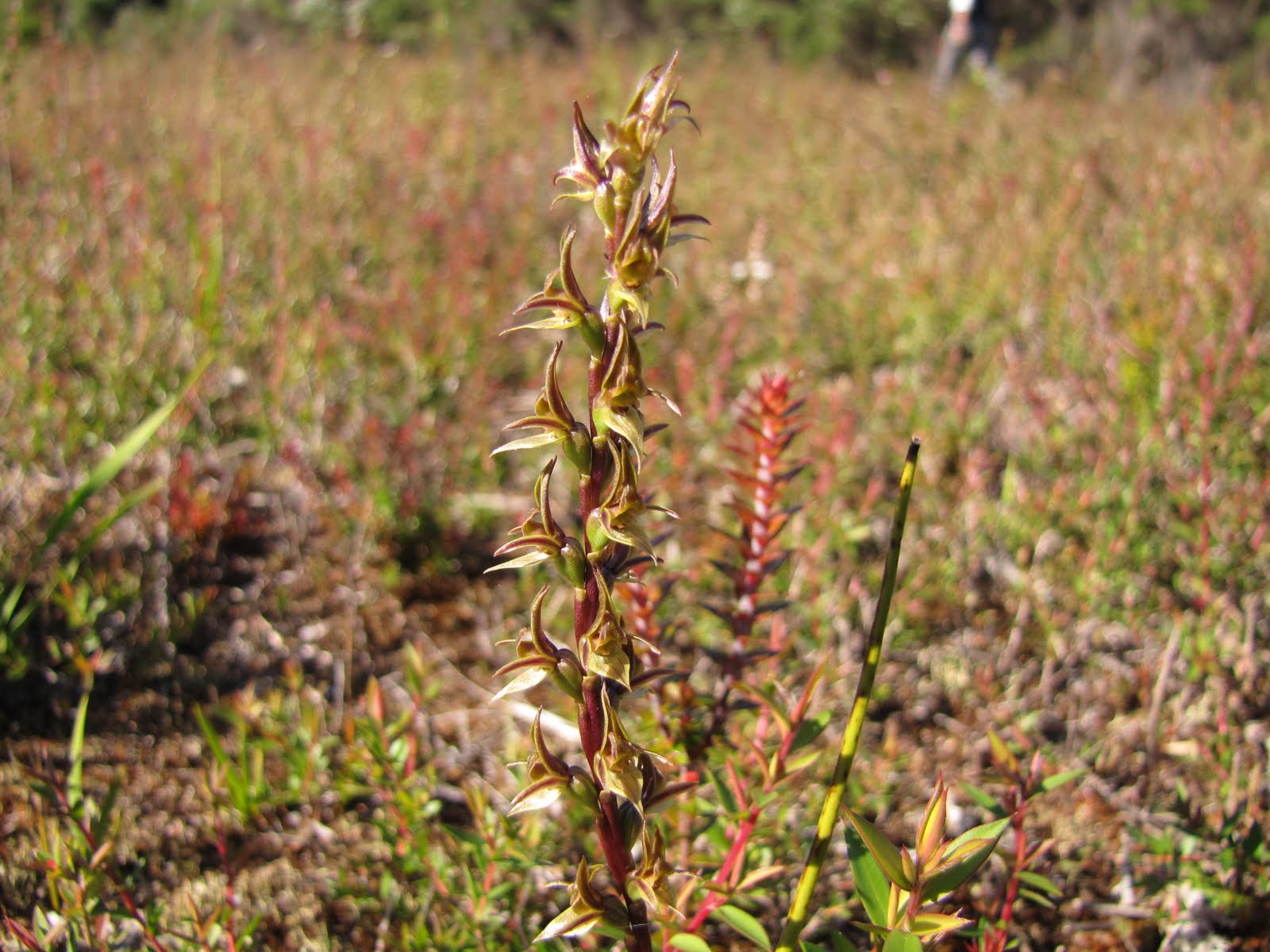
Three Hummock leek-orchid

Three Hummock Island has it's own orchid! It was found here in 1999 and to date our island is the only place in the world where this species is found! It only grows on the main airstrip.


On December 14 a count was carried out. Over 300 plants were counted by 7 people. Quite a job as the airstrip is 1 km long and also has cross sections.

The scientific name is Prasophyllum atratum.

The group consisted of Wendy Potts from the Threatened species unit in Hobart, Peter Hefferon from Parks Tasmania, 2 volunteers - Janine and Alison - even the pilot Chas joined in - of course John and Beverley too!


One of the beautiful orchids on the air strip


The team arriving to do the count.


Wendy Potts from the Threatened species unit in Hobart.

The count is on!


Enjoying a cuppa after a rewarding afternoon


Left to right - Janine, John, Alison, Wendy, Peter and Chas pilot from Seair Wynyard Tasmania. Beverley took the photo.

It is just amazing that something so unique is growing on our airstrip!

Saturday, November 6, 2010

A perfect island escape?

There's something about Three Hummock Island that captures the hearts of all who are lucky enough to visit.

Giuseppe Garibaldi, the famous uniter of Italy, happened upon our shores in 1852.  He was one of the first to try and capture in words what he felt for our island:

"O desert island of the Hunter Group - how many times have you pleasantly excited my imagination.  When tired of this civilized society, so full of tyrants and gendarmes, I have often transported myself in my imagination into your gracious bosom."


Here is what some more recent visitors have had to say in our guest book:
  • Too wonderful to put into words.
  • A very special place
  • A magical place
  • It is refreshing to know that untouched wilderness still exists.  In one week we saw only a few of the wonders this island can reveal.
  • Our stay has been a very special experience.  You can feel the spirit of the island all around you.
  • Bliss!
  • Absolute serenity.  A little piece of heaven untouched.  Pristine beaches, turquoise waters.  Simply utopia!

  • Definitely one of the highlights of Tassie.  Will be back.
  • A lovely, restful place.
  • This island may well be the best place in Australia.
  • It's been a dream come true and more.  This island is idyllic and its lonely beaches and bush tracks, its birds and dolphins.  Quite magic.
  • Wonderful, isolated environment.
  • What an experience - rugged beauty.

What will you say about Three Hummock Island when you visit?

Saturday, October 23, 2010

John and Beverley - Managers

Why do you live here?

This is a question often asked of us. Some think we are crazy, adventurous and many other thoughts! We just wanted to change our lifestyle - as simple as that. May 2008 we set our plan in action. We both resigned from our jobs, rented out our very cherished home to a lovely lady, who is looking after it really well and headed west! Sounds easy, but it was actually a big process! Our first stop was a month living on the western side of the Simpson Desert with a group called Desert Discovery - we identify mammals, birds, plants etc for an entire month - wonderful! Great group of people and we meet every two years in another desert - sadly because of our location we missed out this year.


Our rig - Leaving home!
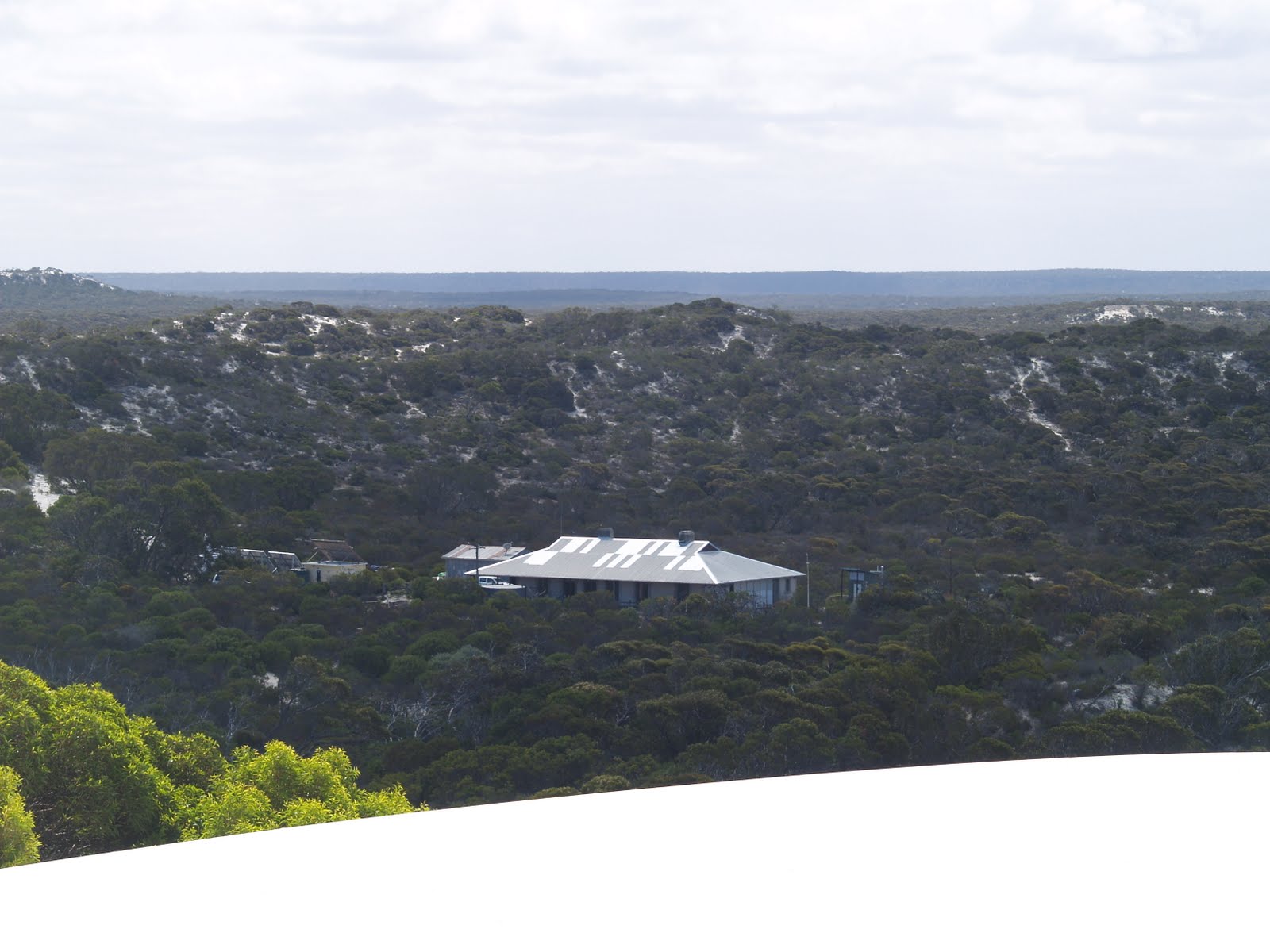
Next was voluntary caretakers at the beautiful Eyre Bird Observatory, Western Australia - Old Telegraph Station built in 1897 - we spent 7 months there. We looked after day and overnight guests (including cooking all the meals!) Identified and counted birds and had an absolutely sensational time there. A great place to visit if you are travelling the Eyre Highway - it is located between Cocklebiddy and Madura and about 50 kms south of the highway along a very sandy 4WD track - a kilometre from the Great Australian Bight and the Southern Ocean.


Taken from the top of one of the many sand dunes.

Some of the amazing birds that visited us - Major Mitchell Cockatoos

We were to go to the Bungle Bungles in the Kimberley next as camp hosts but the position we accepted was given to a couple who had been there last season - we were very disappointed. What do we do now?? Luckily we had a guest at Eyre who told us of the position here! So the process started and finally we arrived here in March 2009 to manage the island. We are great believers in fate - we had never even heard of this island - neither had a lot of our friends and family.

Aerial view of the south west of the island -we live at the top right in the dark green section.
We love living on this beautiful island.